Window 9
Roquefort
A first taste of French cheese becomes a window into wonder, gratitude, and learning to receive the world as a gift.
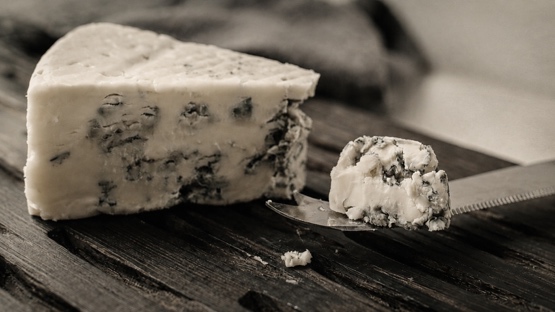
Some people remember exactly where they were when they first fell in love. Others remember their first kiss.
I remember my first bite of Roquefort cheese. Strange, I know.
But good food has always been one of the ways I experience love. I am certain I inherited that from my father. Dad loved feeding people. Around our house, food was not simply fuel. It was celebration, hospitality, and affection made edible.
Some families said, “I love you.”
Ours smoked brisket.
Growing up in Texas, I thought barbecue was about as close to perfection as human beings could reasonably expect this side of heaven. A brisket patiently smoked for sixteen hours until it surrendered beneath the weight of a fork seemed like the summit of culinary achievement. The bark, the smoke ring, and the slow miracle that transforms one of the toughest cuts of meat into something that melts in your mouth felt sacred.
It still does.
I let brisket preach to me as often as my heart can take the extra cholesterol.
Had you asked me then whether food could possibly get any better than Texas barbecue, I would have smiled politely and changed the subject. Some questions reveal such profound cultural confusion that the kindest response is silence.
Then I married a French woman and found myself at a family picnic in France.
It was one of those gatherings the French seem to accomplish effortlessly. Long tables had been arranged beneath the open sky. Fresh bread, fruit, pâté, salads, meats, and cheeses appeared in a leisurely procession, while conversations wandered through the afternoon as though no one had ever invented the idea of eating quickly. The French are really good at that.
But I understood almost none of the language.
Everyone around me laughed in French.
I smiled in Texan.
Every few minutes someone would ask me a question I could not understand. I would answer with the handful of French words I knew, which certainly had nothing to do with what had been asked. Everyone laughed kindly, and I laughed too, though usually for different reasons.
Language divided us.
Bread did not.
Like any sensible newcomer, I eventually gravitated toward the cheese table. If France has a national pastime, it may be placing extraordinary cheeses on ordinary wooden boards and pretending this is perfectly normal.
Someone handed me a piece of bread with a small wedge of Roquefort resting upon it.
I had never tasted Roquefort before. Somehow, despite a lifetime of loving good food, our paths had never crossed.
I took a bite.
And for one completely bewildering moment, the conversation around me disappeared.
I do not know how to describe the taste except to say that it seemed larger than taste. It was salty and creamy at the same time, sharp yet somehow gentle, bold without being harsh. It unfolded in layers, each revealing something beneath it. Every second brought another flavor, as though tastes I did not know existed had been waiting patiently for their turn.
It was not merely delicious.
It was astonishing.
I laughed aloud, then raced back toward the picnic table and declared, with now-embarrassing zeal to people who had presumably been eating Roquefort since infancy, “Have you tasted this?”
For once that day, I was grateful they understood English about as well as I understood French.
My mouth did not know it was allowed to experience something like this.
I realize that sounds ridiculous. Some people cannot stand Roquefort. Others are already wondering why anyone would voluntarily eat mold.
Fair enough. Taste is deeply personal, and blue cheese is not among the spiritual gifts required for membership in the body of Christ.
But for me, standing among people whose language I barely understood, something unexpected happened.
Wonder arrived.
I have remembered that afternoon as the day I discovered remarkable cheese, but I now understand why the moment affected me so deeply.
I was tasting more than cheese.
I was tasting grass and rain, animals and people, salt and caves, inherited knowledge and patient work. I was tasting what can happen when human beings receive the materials of creation and, through imagination, skill, and care, draw out possibilities hidden within them.
Milk does not awaken one morning with blue veins and an aristocratic accent.
Someone has to tend the animals. Someone has to receive the milk. Someone has to preserve the knowledge, practice the craft, and wait while time does what human hands cannot hurry.
That is what good culture does. It does not create the world from nothing. It receives what has been given and cultivates its possibilities.
The Texans received cattle, smoke, wood, seasoning, and time and arrived at brisket.
The French received milk, caves, salt, mold, and time and arrived at Roquefort.
God bless them both.
But there was another reason that bite reached me.
I had always lived within a culture of extraordinary abundance, yet abundance had not always taught me to delight. Often it had trained me to consume.
Consumerism keeps promising that more desire will produce more delight. It surrounds us with options, novelty, upgrades, and endless stimulation. It teaches us to move rapidly from one appetite to the next, rarely remaining with anything long enough to receive it.
We acquire more and taste less.
We scroll past beauty before it has time to reach us. We eat while staring at screens, listen to music while answering messages, and treat meals as interruptions between important tasks. Even pleasure becomes hurried. Nothing satisfies for long because nothing is permitted to remain enough.
I knew how to enjoy food. But even enjoyment can become another form of acquisition. I could chase the next restaurant, the next flavor, or the next experience while missing the deeper gift beneath them all.
The problem was not that I liked good things too much.
The problem was that I could receive good things too shallowly.
Standing at that picnic, I was being reminded that delight is not the same as consumption.
Consumption grasps and moves on.
Delight receives. It lingers. It gives thanks. It allows the gift to direct the heart beyond itself.
My taste buds worked perfectly well.
It was my vision that needed healing.
God could have created a world that merely functioned. He could have provided the calories necessary to keep our bodies alive and stopped there. Plants could have been nutritious without being beautiful. Birds could have communicated without singing. Human beings could have survived without tenderness, laughter, music, fragrance, or flavor.
Instead, creation spills beyond usefulness.
Mountains are excessive. Sunsets are unnecessary. Music exceeds survival. Flowers bloom in places where no human being may ever see them. The world contains thousands of fruits, grains, spices, textures, aromas, and flavors that testify to a Creator who does not appear especially committed to bare minimums.
The world does not merely work. It sings.
Perhaps that is why Jesus’ first public sign in John’s Gospel took place at a wedding where the wine had run out. He did not scold everyone for celebrating or remind them that water was perfectly adequate for hydration.
He made more wine.
Very good wine.
The sign pointed beyond the wine, of course. It revealed who Jesus was and announced the coming feast of God’s Kingdom. But it also revealed something about God.
He is not embarrassed by joy.
That afternoon in France, Roquefort became a small window. For a moment I could see through it toward the One who could have made a world that merely sustained us but instead made one capable of astonishing us.
The cheese did not become God.
It became transparent.
I am still learning to receive the world that way. I remain perfectly capable of eating an entire meal without truly tasting it, walking past beauty while thinking about something “important,” or turning a gift into an appetite for the next gift.
But sometimes grace slows me down.
Sometimes coffee remains in my mouth long enough to become coffee again. Bread becomes bread. Music reaches me before I can reduce it to background noise. Someone’s laughter interrupts my hurry. An ordinary meal becomes a place of communion.
And once in a while, a piece of cheese becomes a window.
The gift does not have to be expensive or exotic. It may be soup prepared by someone who loves us, vegetables from a backyard garden, the smell of rain, a song we had forgotten, or bread broken among people whose words we do not completely understand.
The next faithful step may be nothing more dramatic than remaining with one good thing long enough to receive it.
To taste.
To linger.
To give thanks.
Perhaps the life to come will be less about discovering entirely new pleasures than finally receiving all good things as they were meant to be received—without hurry, possession, fear, guilt, or the restlessness that turns every gift into an appetite for the next one.
If that is true, I have a feeling there will be a cheese board somewhere.
And I already know where I am headed.
“Roquefort” is adapted from my new book, Eyes to See: Seeing the Kingdom in Ordinary Life, releasing September 14. The book explores how ordinary experiences can become windows through which we recognize the Kingdom of God already among us—and discover the next faithful step along the Way.